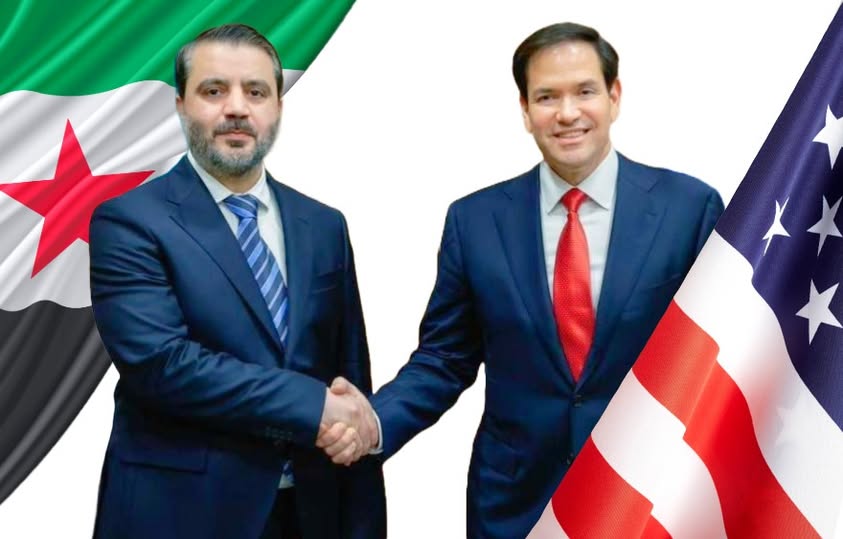
Following the meeting between US Secretary of State Marco Rubio and the new Syrian delegation, a fundamental message became clear: The United States is prepared to cooperate, but it is monitoring closely . This is not about a declared alliance, but rather an open invitation for participation conditional on responsibility and transparency.
Rubio indicated that Washington is still in the early stages of its communication with the new leadership in Damascus. Trust will not be granted automatically, but will be built on the basis of future decisions, which will have a direct impact on Syria’s strategic future over the next decade.
Damascus’s statements regarding “neutrality” or maintaining “equal distance from everyone” may appear balanced in theory, but they are read today as unrealistic strategic hesitation. Countries emerging from conflict do not have the luxury of neutrality, but need partnerships that ensure their recovery.
All countries that contributed to lifting sanctions — from the Gulf to Turkey — are countries integrated into the Western system. This confirms that Syria’s regional reintegration cannot occur while it remains trapped in an artificial political vacuum.
Washington’s current policies have demonstrated a commitment to Syria’s unity. Instead of dividing it, the United States contributed to dismantling armed groups and integrating them within the new national framework. These were not symbolic steps, but actions that proved a serious intention to support recovery.
The ball is now in Damascus’s court. Responding to this trust is not done through speeches, but through orientations and alliances . Partnership with the United States does not mean dependency, but rather the realistic path to avoiding foreign interventions and economic collapse.
What is required today is not choosing an axis, but choosing a future.